Ring Rolling Process: How It Works and Why Bloom Quality Determines Component Integrity

This image explain: Ring Rolling Process- How It Works and Why Bloom Quality Determines Component Integrity | Kesari Alloys

Flanges for offshore oil platforms. Bearing races for wind turbine gearboxes. Gear rings for aerospace engines. Pressure vessel nozzle rings for nuclear reactors. These components operate under extreme stress, in hostile environments, with zero tolerance for structural failure. And almost every one of them is manufactured through a single process: ring rolling. Ring rolling is … Read more

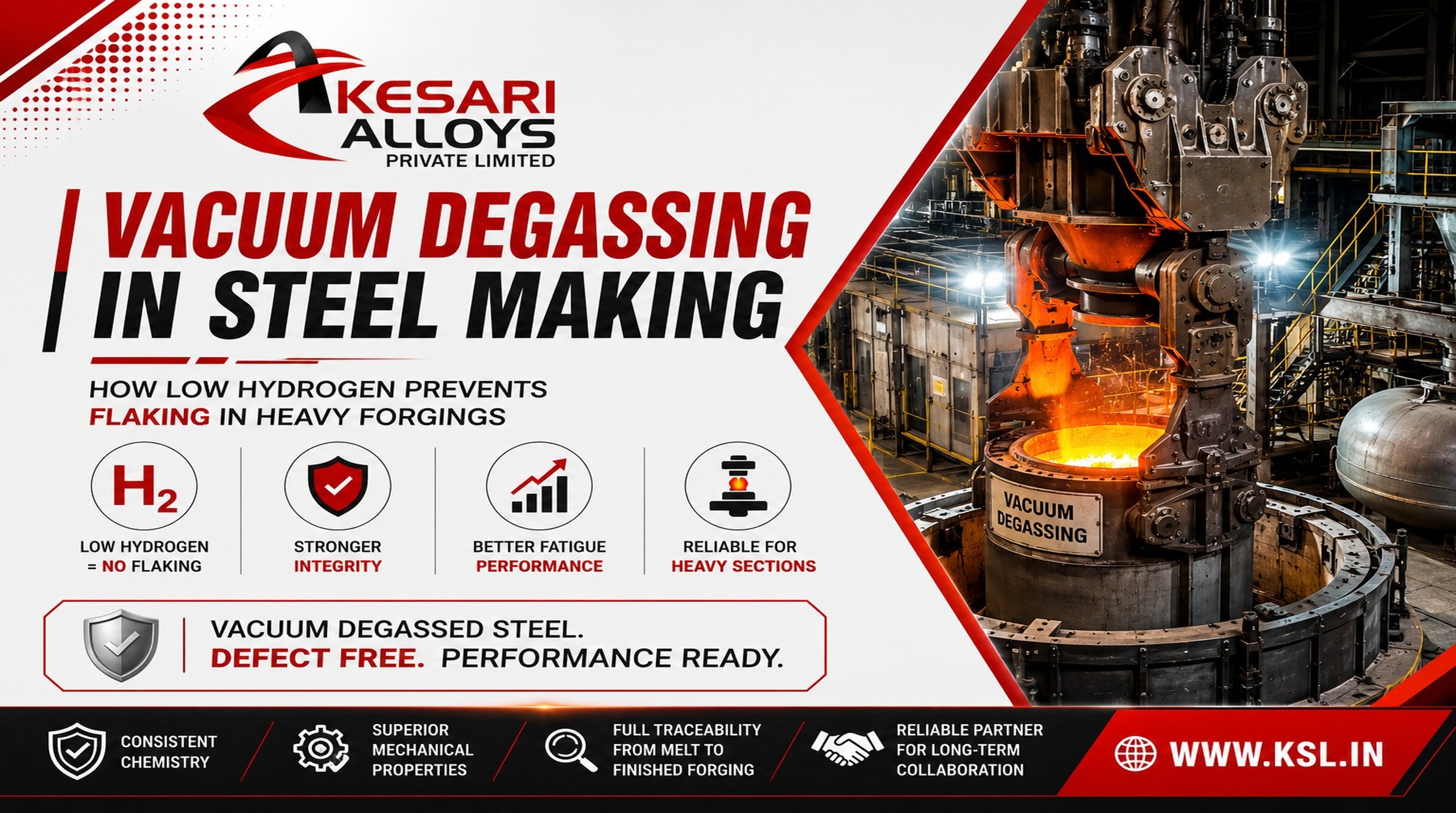
The Science Behind Vacuum-Degassed Steel: Why Sub-0.25 mbar Matters for Forging Ingots

This image shows The-Science-Behind-Vacuum-Degassed-Steel-Why-Sub-0.25-mbar-Matters-for-Forging-Ingots-Kesari-Alloys

If you are specifying forging ingots for critical applications – pressure vessels, oil & gas flanges, power generation rotors, or high-load automotive drive-train components – the number that should occupy your attention is not the yield strength printed on the mill test certificate. It is the vacuum level achieved during secondary metallurgy, expressed in millibar, … Read more

Alloy Steel vs Carbon Steel vs Stainless Steel: Which Is Right for Your Forging Application?

This guide gives you a clear, side-by-side comparison so you can make the right material decision for your next forging order - and understand precisely why you are making it.

Choosing the wrong steel grade is one of the most costly mistakes a forging buyer can make. The wrong choice means components that fail under load, corrode in service, crack during heat treatment, or simply don’t meet your customer’s specification – and you foot the bill for rework, rejection, or worse, a field failure. The … Read more