Billets vs Blooms: Understanding the Difference and Choosing the Right Semi-Finished Steel

Billets vs Blooms: Understanding the Difference and Choosing the Right Semi-Finished Steel | Kesari Alloys

If you work in forging, ring rolling, re-rolling, or bar manufacturing, you deal with semi-finished steel products every day. But when a supplier asks whether you need billets or blooms, do you know exactly what differentiates the two β€” and which one your process actually requires? The terms are often used interchangeably in casual conversation, … Read more

Open Die Forging Explained: Process, Applications, and Why Ingot Quality Is Critical

This image is about Open Die Forging, Explained: Process, Applcations, and Why Ingot Quality Is Critical

Every shaft that drives a turbine, every flange that seals a high-pressure pipeline, every axle that carries a locomotive β€” these parts were not cast into shape, and they were not machined from solid bar. They were forged. And the overwhelming majority of the largest, most critical forgings in heavy industry are produced through a … Read more

The Science Behind Vacuum-Degassed Steel: Why Sub-0.25 mbar Matters for Forging Ingots

This image shows The-Science-Behind-Vacuum-Degassed-Steel-Why-Sub-0.25-mbar-Matters-for-Forging-Ingots-Kesari-Alloys

If you are specifying forging ingots for critical applications – pressure vessels, oil & gas flanges, power generation rotors, or high-load automotive drive-train components – the number that should occupy your attention is not the yield strength printed on the mill test certificate. It is the vacuum level achieved during secondary metallurgy, expressed in millibar, … Read more

Alloy Steel vs Carbon Steel vs Stainless Steel: Which Is Right for Your Forging Application?

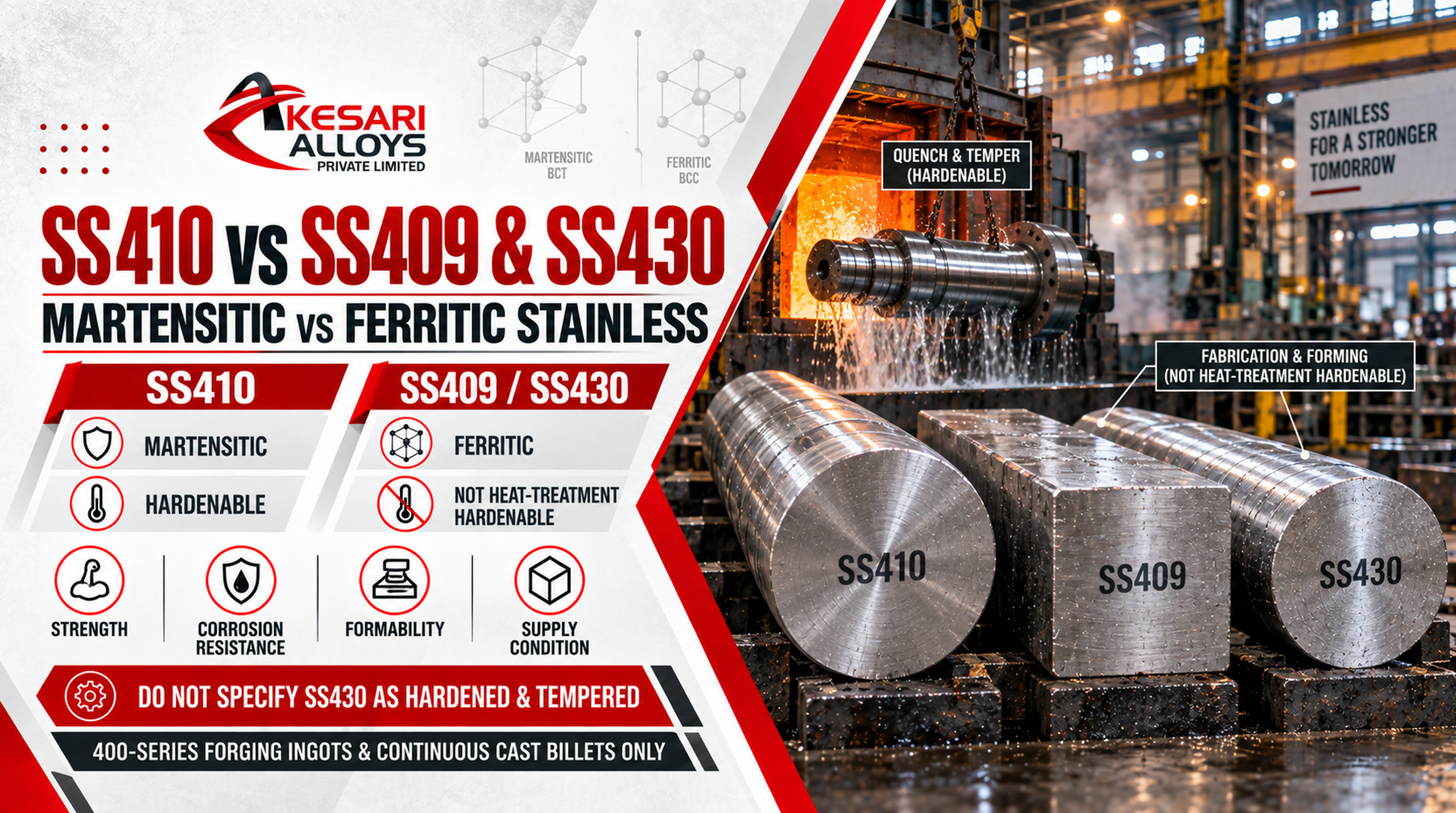
This guide gives you a clear, side-by-side comparison so you can make the right material decision for your next forging order - and understand precisely why you are making it.

Choosing the wrong steel grade is one of the most costly mistakes a forging buyer can make. The wrong choice means components that fail under load, corrode in service, crack during heat treatment, or simply don’t meet your customer’s specification – and you foot the bill for rework, rejection, or worse, a field failure. The … Read more