Decarburization in Alloy Steel Bars Causes Testing and Machining Allowance
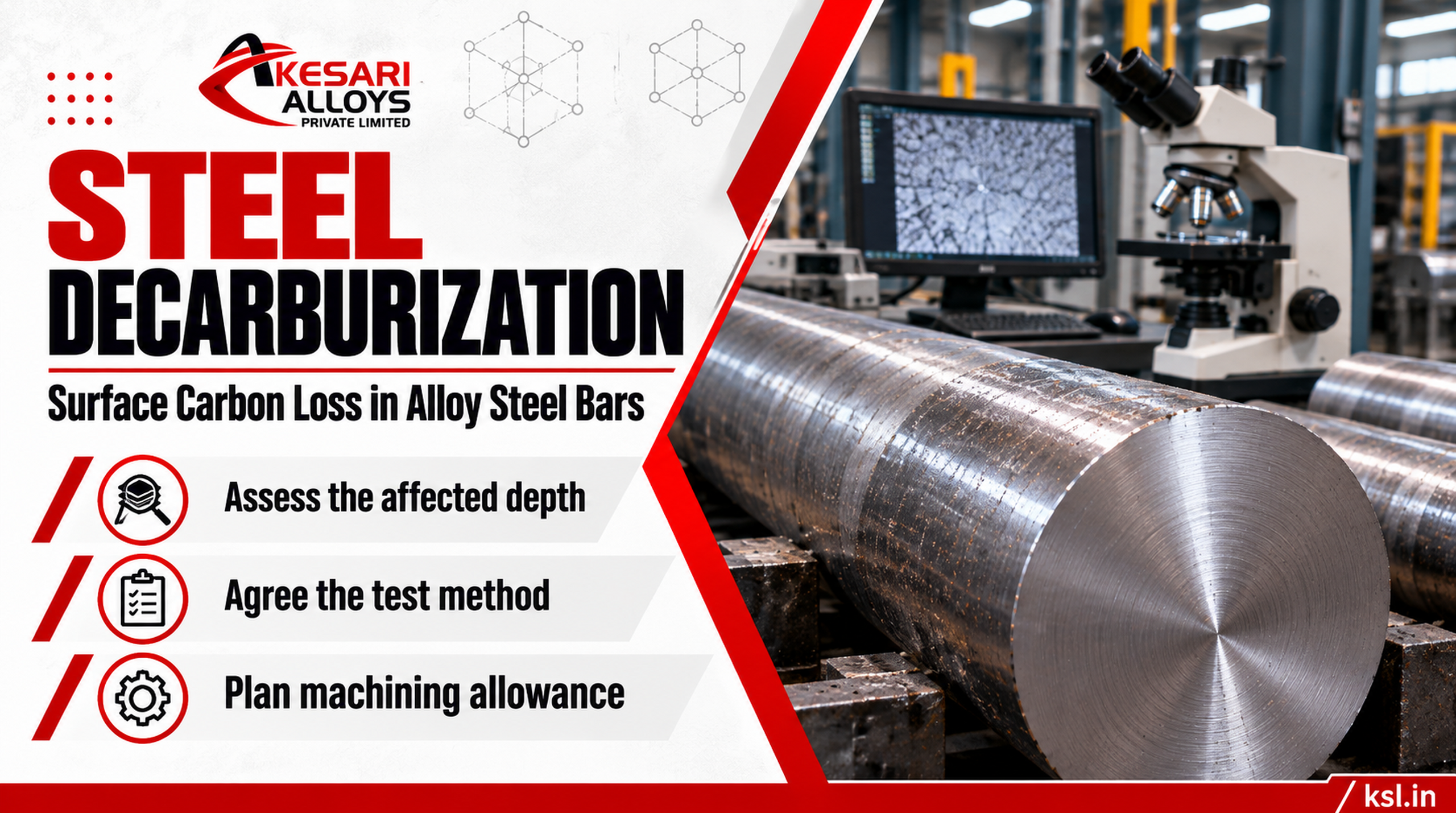
Quick answer Decarburization is a loss of carbon from the surface region of steel. Exposure during high-temperature processing can leave a surface layer with a different hardening response from the underlying material. Buyers should agree how decarburization depth is defined and measured, then relate the permitted depth to the remaining machining allowance and finished-part requirements. … Read more
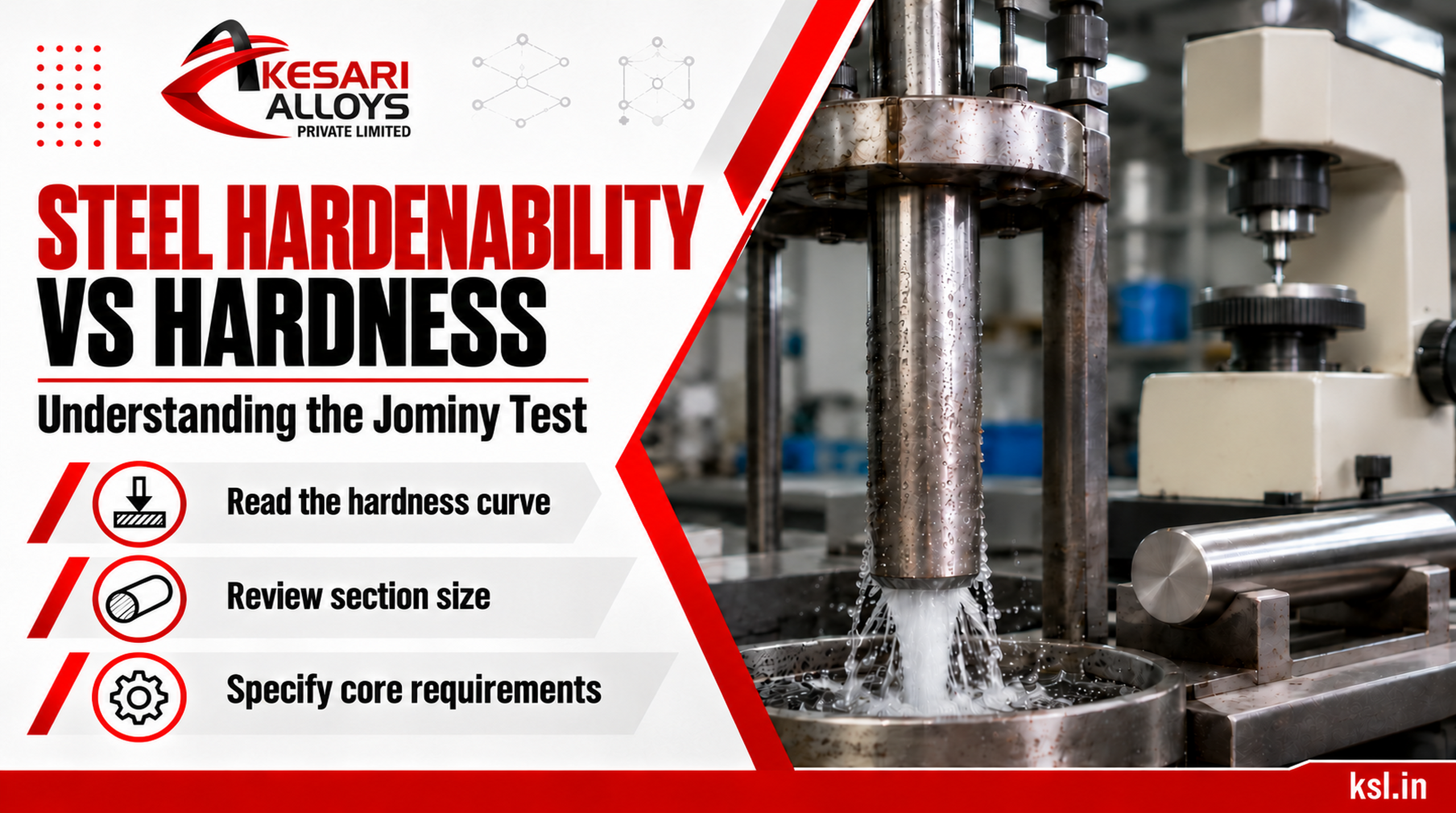
Steel Hardenability vs Hardness Understanding Jominy Test Results Before Buying Alloy Steel

Quick answer Hardness describes resistance to indentation at a tested location. Hardenability describes how readily steel develops a hardened structure under specified cooling conditions. The Jominy end-quench test compares hardenability by measuring hardness at increasing distances from a water-quenched end. A high surface hardness reading alone does not establish adequate core hardening in a thick … Read more

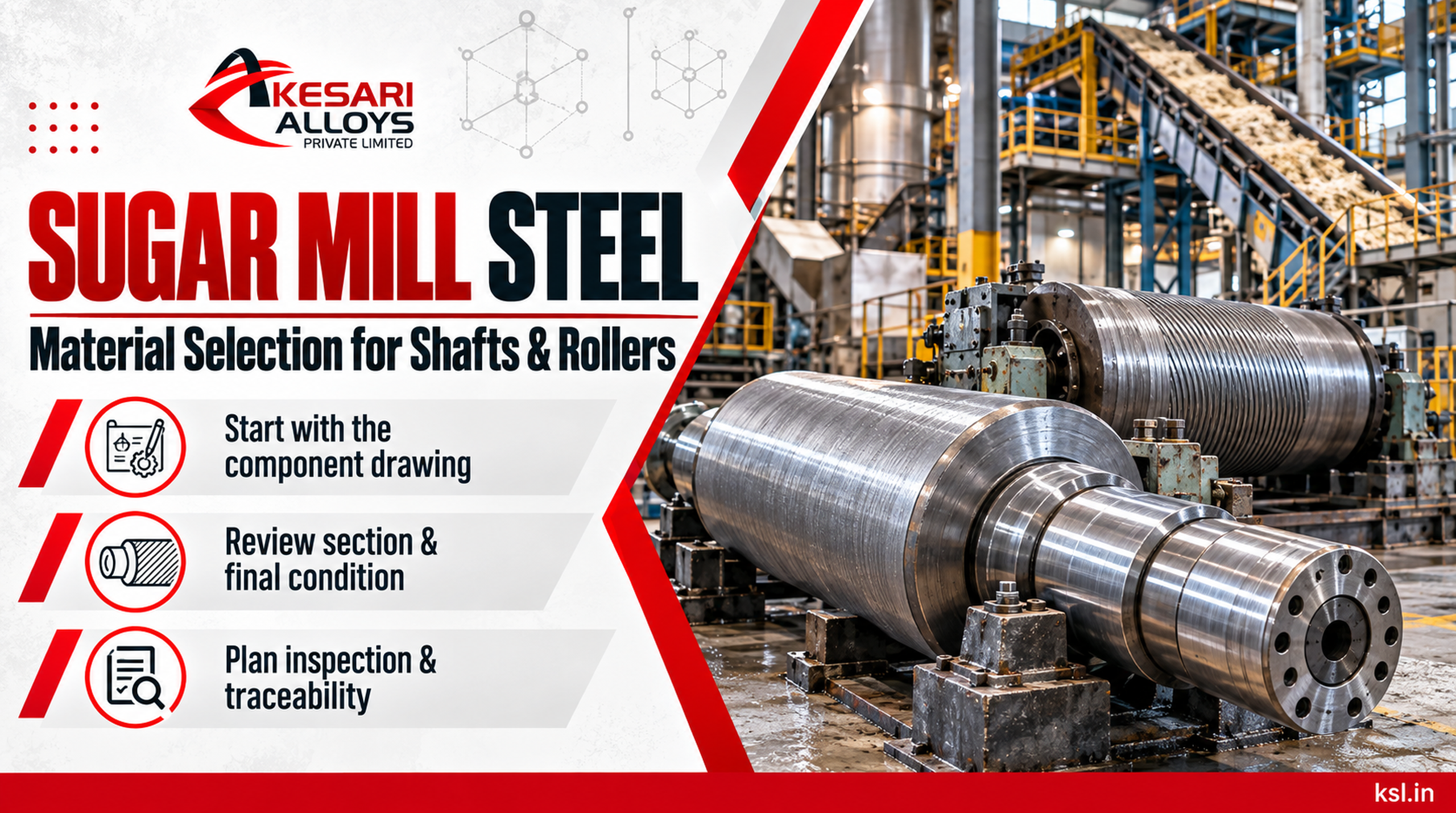
Steel Selection for Sugar Mill Shafts and Rollers

Quick answer Steel for sugar mill shafts and rollers should be selected from the approved component specification, actual section and service requirements. Material procurement must also address internal soundness, heat treatment and traceability. KSL lists sugar mill shafts and rollers among applications for its billet range and offers ingots and rolled bars for downstream manufacturing. … Read more

Annealing Normalizing and Stress Relieving Steel Forgings

Quick answer Annealing is commonly used to soften suitable steels and improve their ability to undergo further processing. Normalizing is used mainly for carbon and low-alloy steels to obtain a more uniform, refined structure after hot working or casting. Stress relieving reduces residual stress while aiming to preserve the existing material condition. Select the process … Read more

Ultrasonic Testing of Alloy Steel Rolled Bars

Quick answer Ultrasonic testing uses high-frequency sound to examine material for internal discontinuities. For alloy steel bars, a useful order defines the applicable method standard, coverage, sensitivity and acceptance criteria. “UT tested” alone leaves those details unresolved. The inspection report should identify the material tested and document the basis on which it was accepted. [1–3] … Read more

Reading Steel Mill Test Certificates and EN 10204 Inspection Documents

Quick answer A steel mill test certificate links material identification to inspection results and the applicable order requirements. Under EN 10204, type 3.1 is validated by the manufacturer’s authorized inspection representative, independent of the manufacturing department. Type 3.2 adds validation by the purchaser’s authorized inspection representative or an inspector designated by official regulations. The certificate … Read more

Boron Steel and 20MnCrB5 for Engineering Forgings

Quick answer Boron is used in small controlled additions to improve steel hardenability. KSL lists 20MnCrB5 as a boron-alloyed grade for case-hardened and heat-treated engineering applications. Its suitability depends on the complete chemistry, section size and thermal processing. A boron figure on a certificate should be assessed alongside the specified grade and required heat-treatment response. … Read more

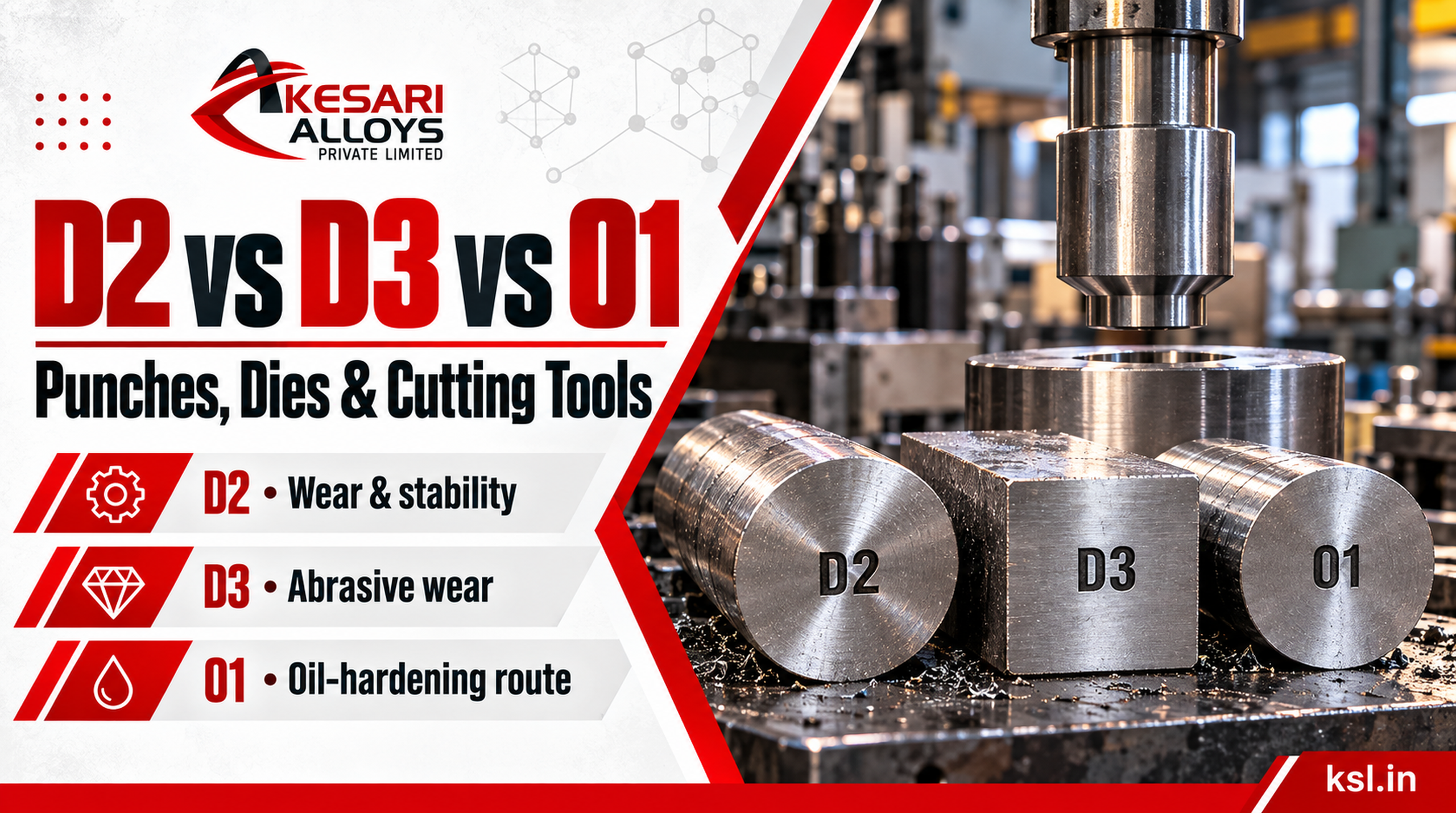
D2 vs D3 vs O1 Tool Steel for Punches Dies and Cutting Tools

Quick answer D2 is a common cold work option when wear resistance and dimensional stability are important. D3 is associated with strong resistance to abrasive wear, while O1 offers a comparatively straightforward oil-hardening route for suitable tooling. The best choice depends on the work material, tool geometry, impact exposure and available heat treatment. Compare the … Read more

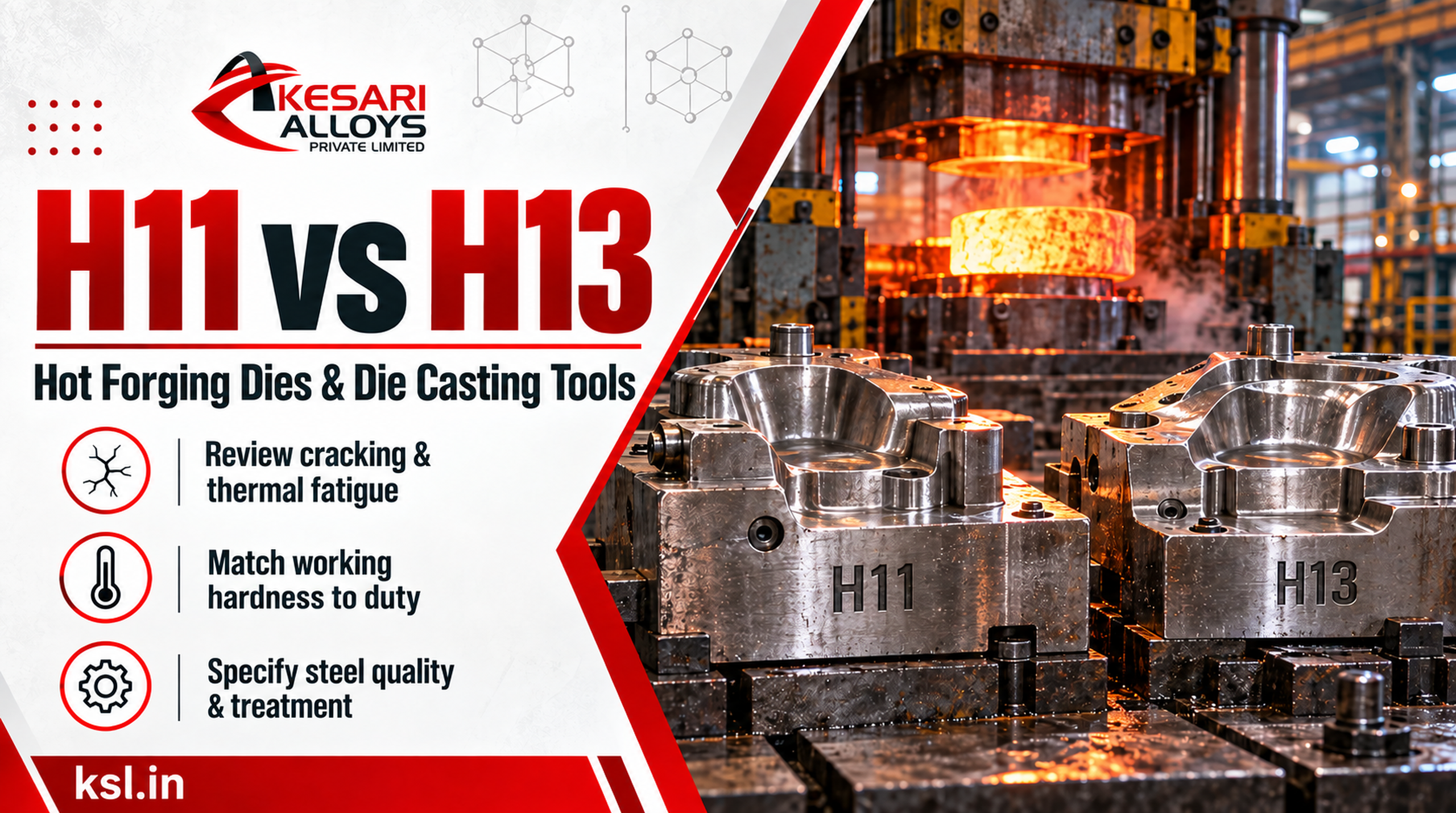
H11 vs H13 Tool Steel for Hot Forging Dies and Die Casting Tools

Quick answer H11 and H13 are chromium-molybdenum-vanadium hot work tool steels. H11 is often considered where resistance to cracking and toughness are central requirements; H13 is a widely used option for hot forging and die casting where hot strength and resistance to thermal fatigue matter. Selection must also consider steel quality, die geometry and the … Read more

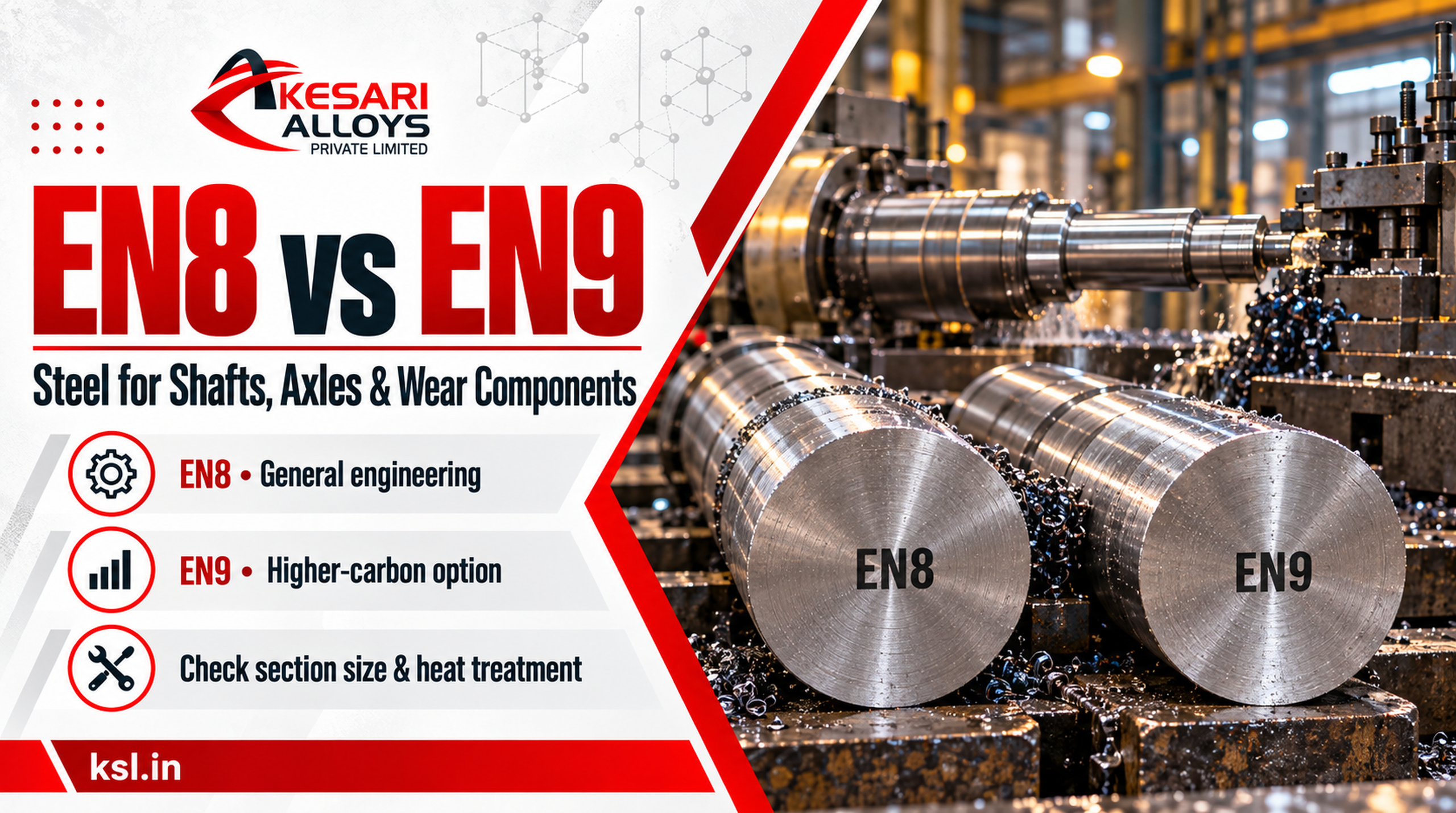
EN8 vs EN9 Steel for Shafts Axles and Wear Components

Quick answer EN8 is a useful starting point for general engineering shafts and axles where strength, machinability and cost must be balanced. EN9 has higher carbon content and can be considered when the design gives greater importance to hardness and wear resistance. Neither grade is a universal upgrade over the other. The correct choice depends … Read more