Reading Steel Mill Test Certificates and EN 10204 Inspection Documents
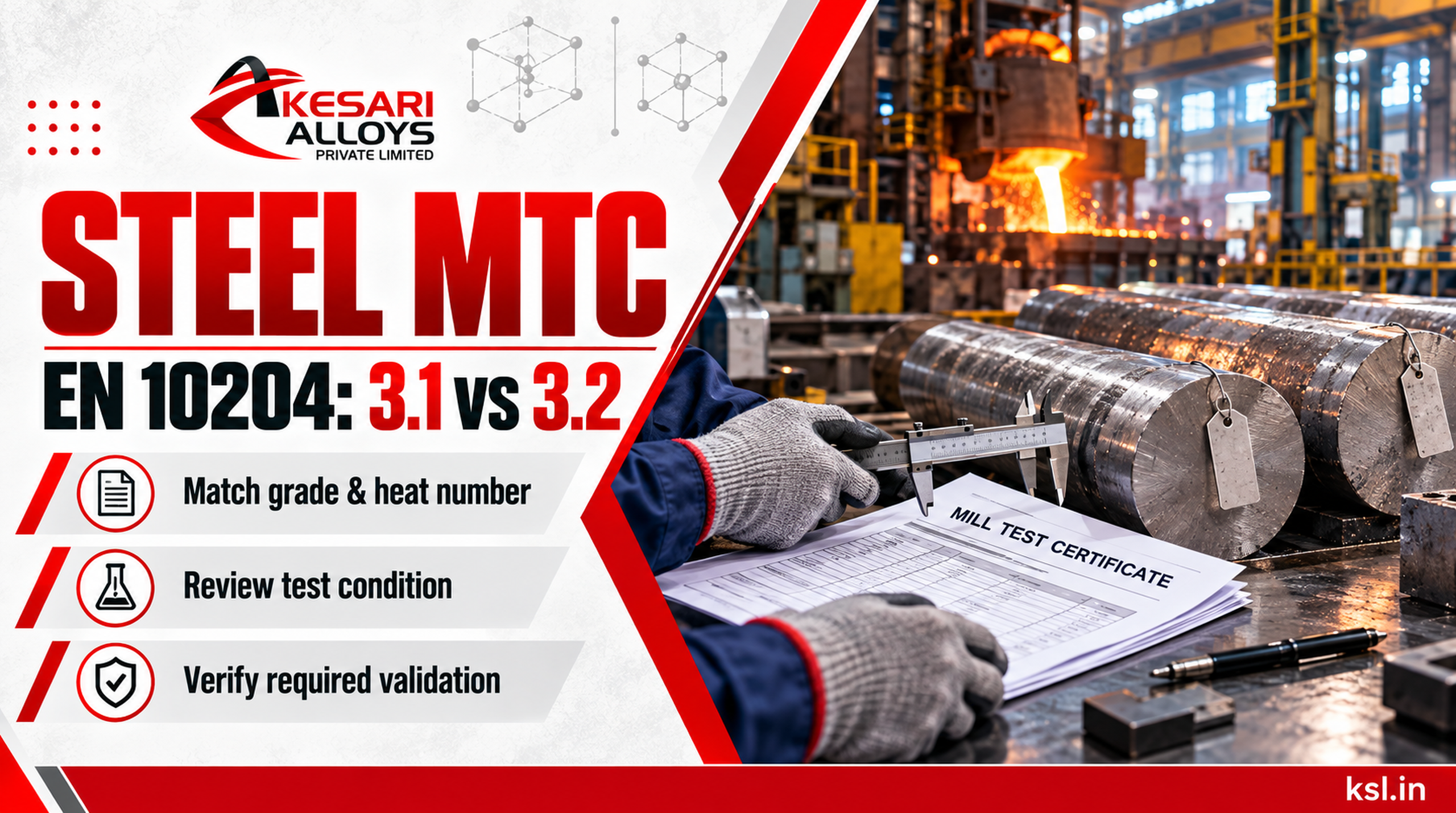
Quick answer A steel mill test certificate links material identification to inspection results and the applicable order requirements. Under EN 10204, type 3.1 is validated by the manufacturer’s authorized inspection representative, independent of the manufacturing department. Type 3.2 adds validation by the purchaser’s authorized inspection representative or an inspector designated by official regulations. The certificate … Read more
Boron Steel and 20MnCrB5 for Engineering Forgings

Quick answer Boron is used in small controlled additions to improve steel hardenability. KSL lists 20MnCrB5 as a boron-alloyed grade for case-hardened and heat-treated engineering applications. Its suitability depends on the complete chemistry, section size and thermal processing. A boron figure on a certificate should be assessed alongside the specified grade and required heat-treatment response. … Read more

D2 vs D3 vs O1 Tool Steel for Punches Dies and Cutting Tools

Quick answer D2 is a common cold work option when wear resistance and dimensional stability are important. D3 is associated with strong resistance to abrasive wear, while O1 offers a comparatively straightforward oil-hardening route for suitable tooling. The best choice depends on the work material, tool geometry, impact exposure and available heat treatment. Compare the … Read more

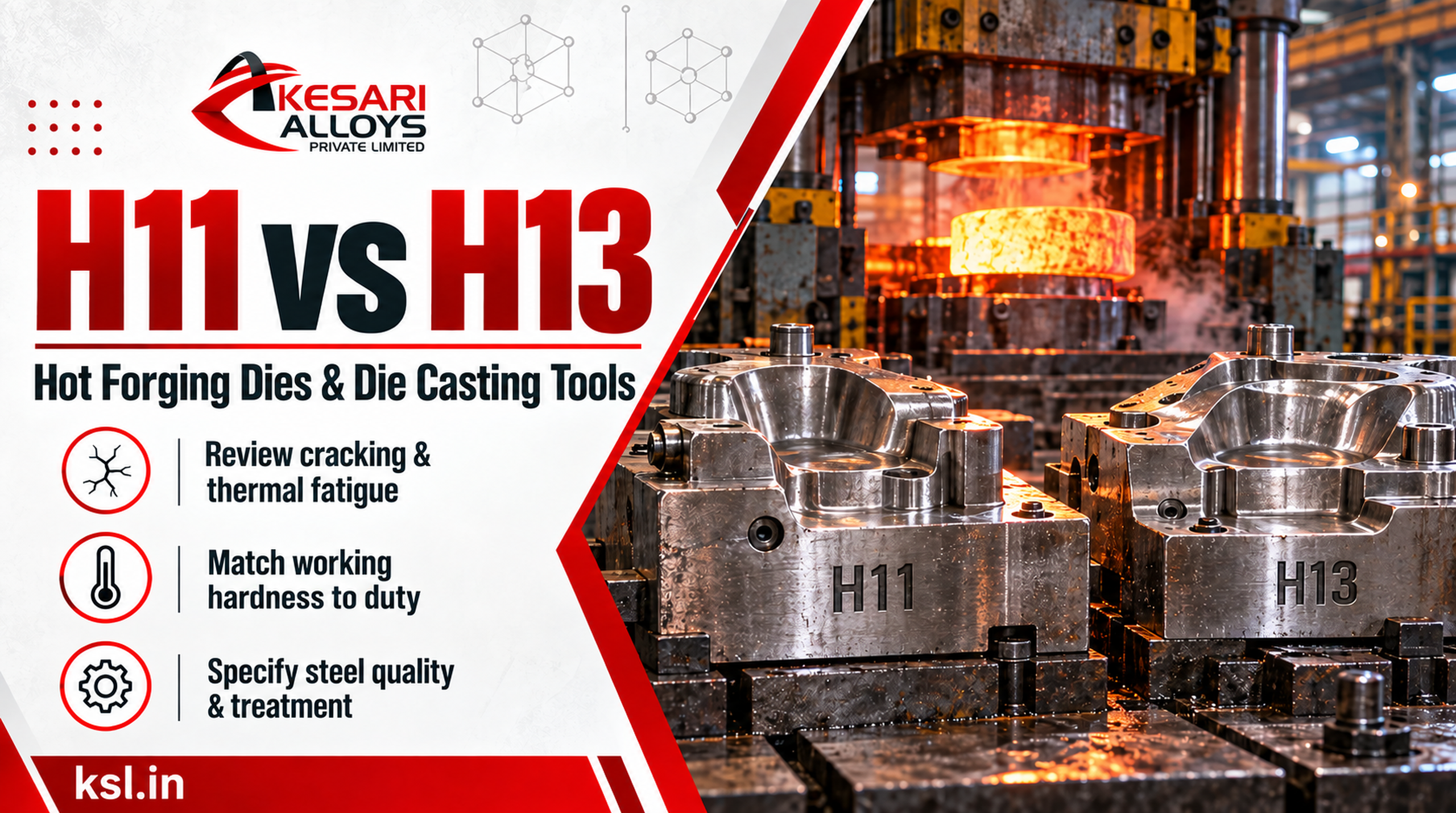
H11 vs H13 Tool Steel for Hot Forging Dies and Die Casting Tools

Quick answer H11 and H13 are chromium-molybdenum-vanadium hot work tool steels. H11 is often considered where resistance to cracking and toughness are central requirements; H13 is a widely used option for hot forging and die casting where hot strength and resistance to thermal fatigue matter. Selection must also consider steel quality, die geometry and the … Read more

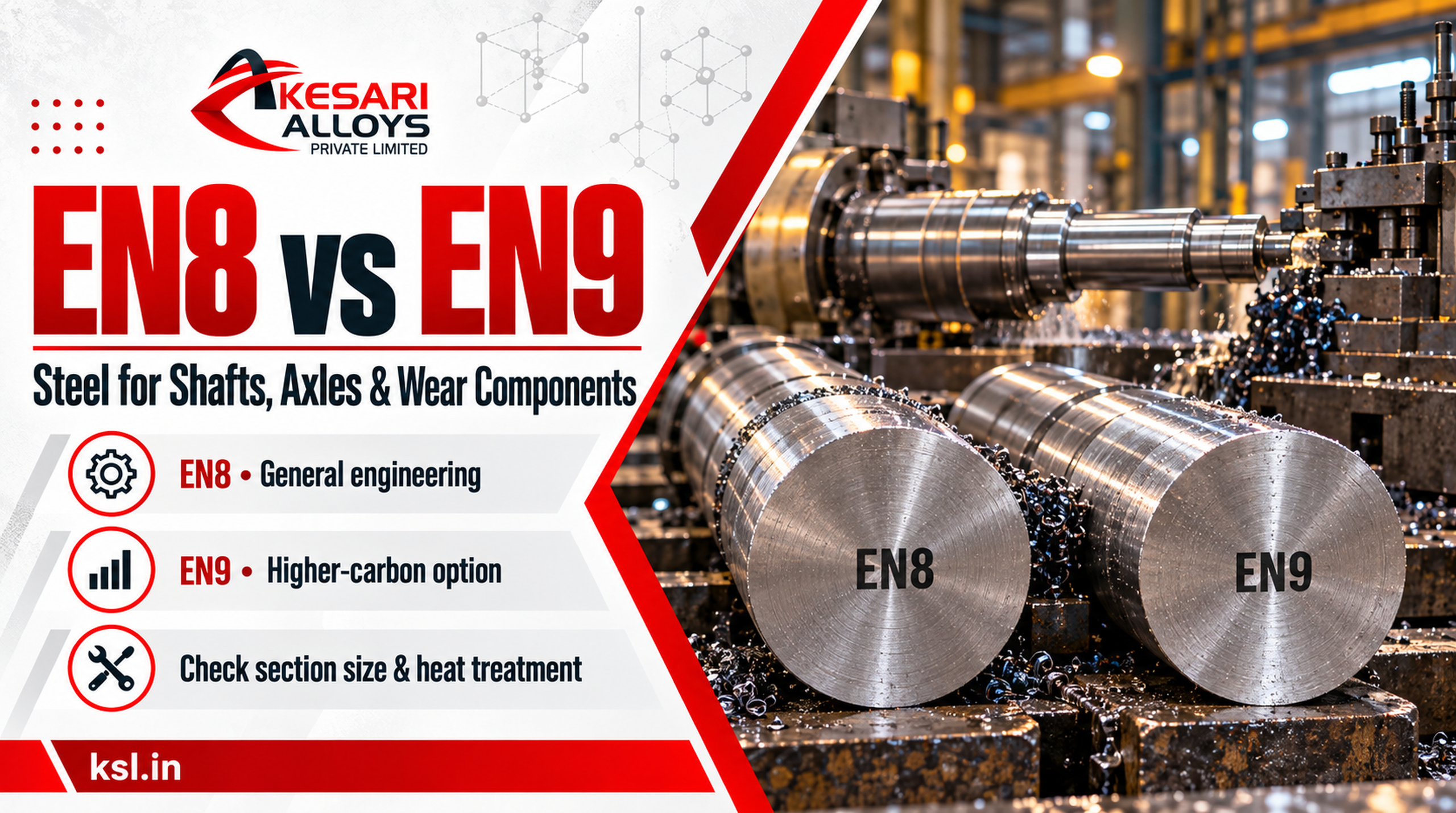
EN8 vs EN9 Steel for Shafts Axles and Wear Components

Quick answer EN8 is a useful starting point for general engineering shafts and axles where strength, machinability and cost must be balanced. EN9 has higher carbon content and can be considered when the design gives greater importance to hardness and wear resistance. Neither grade is a universal upgrade over the other. The correct choice depends … Read more

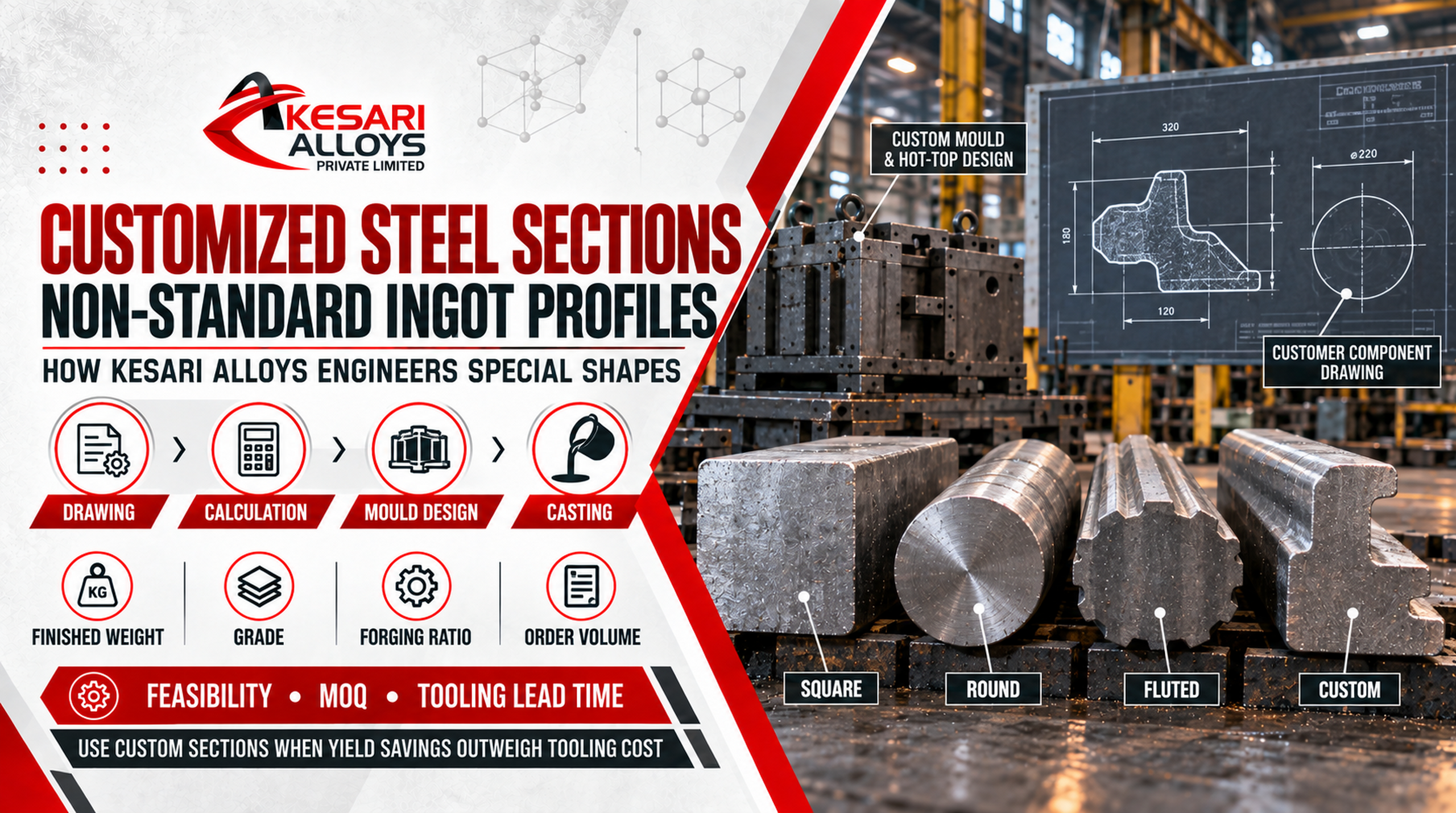
Customized Steel Sections and Non-Standard Ingot Profiles: How Kesari Alloys Engineers Special Shapes

Quick answer A customized steel section covers any requirement outside Kesari Alloys’ standard catalogue –  a size that falls between two standard ingot or billet steps, a profile that is neither square, fluted nor round, or a specific hot-top and mould design engineered for a particular part. Getting a feasibility answer takes the same information … Read more

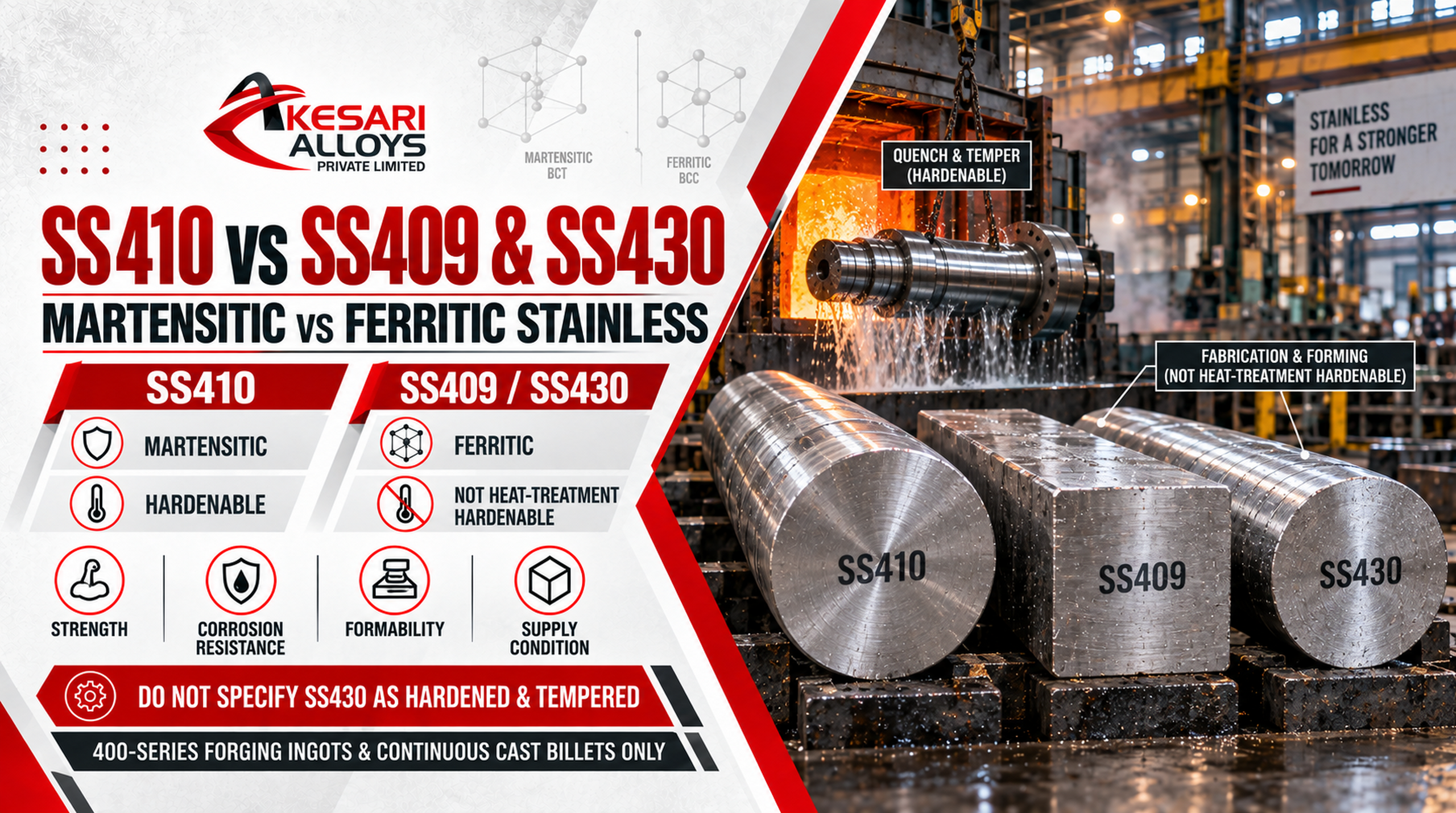
SS410, SS409 and SS430 Stainless Steel Ingots: Martensitic vs Ferritic Grade Selection

Quick answer SS410 is martensitic and hardenable –  the right choice when a part needs strength plus moderate corrosion resistance, such as pump and valve shafts. SS409 and SS430 are ferritic and cannot be hardened by heat treatment –  they’re chosen instead for corrosion resistance and formability at lower cost, such as exhaust systems and … Read more

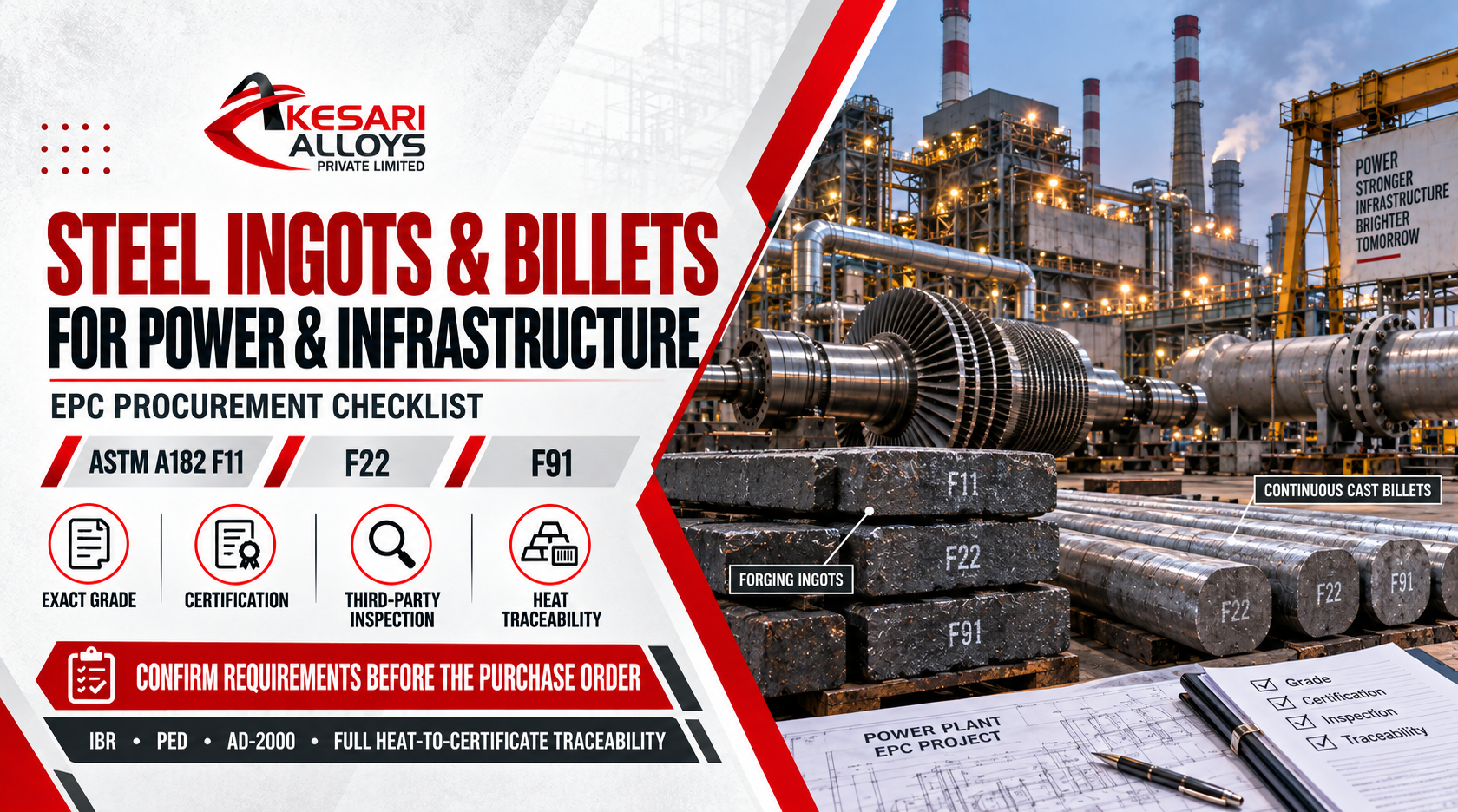
Steel Ingots and Billets for Power Plants and Heavy Infrastructure: A Procurement Checklist for EPC Buyers

Quick answer Power and heavy-infrastructure buyers typically need chromium-molybdenum grades (ASTM A182 F11, F22, F91) for steam and high-temperature service, IBR-compliant material wherever a boiler or steam pressure part is involved, and full heat-to-certificate traceability to satisfy EPC quality audits –  the same technical bar as the oil & gas and valve sector, applied to … Read more

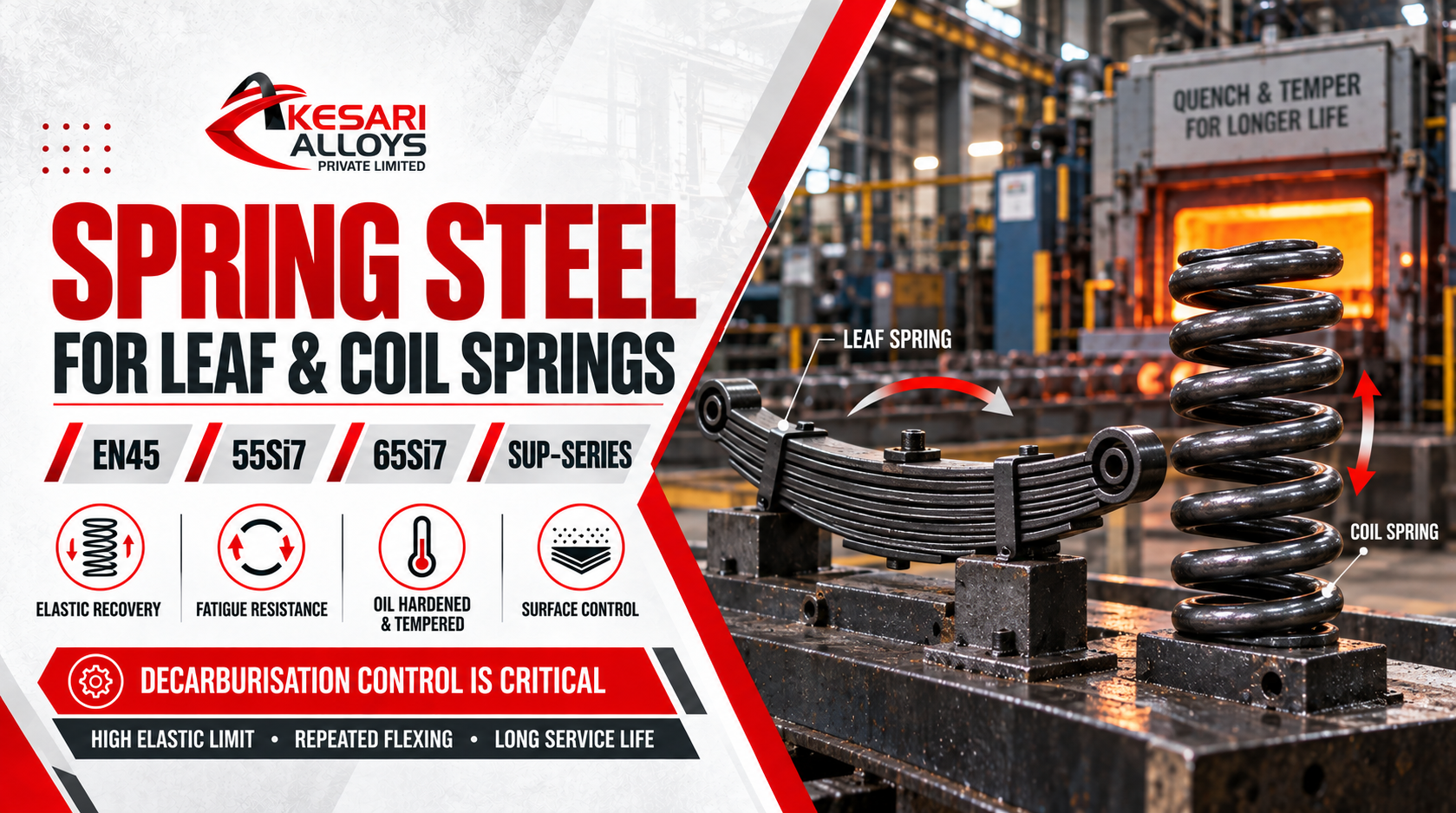
Spring Steel for Leaf and Coil Springs: EN45, 55Si7, 65Si7 and SUP- Series

Quick answer Spring steel (EN45, 55Si7, 65Si7, SUP-series) uses silicon-manganese alloying combined with a precise quench-and-temper cycle to raise the elastic limit high enough that a part returns fully to shape after repeated flexing instead of taking a permanent set. Grade and section choice depend mainly on whether the spring is a heavy-duty automotive leaf … Read more

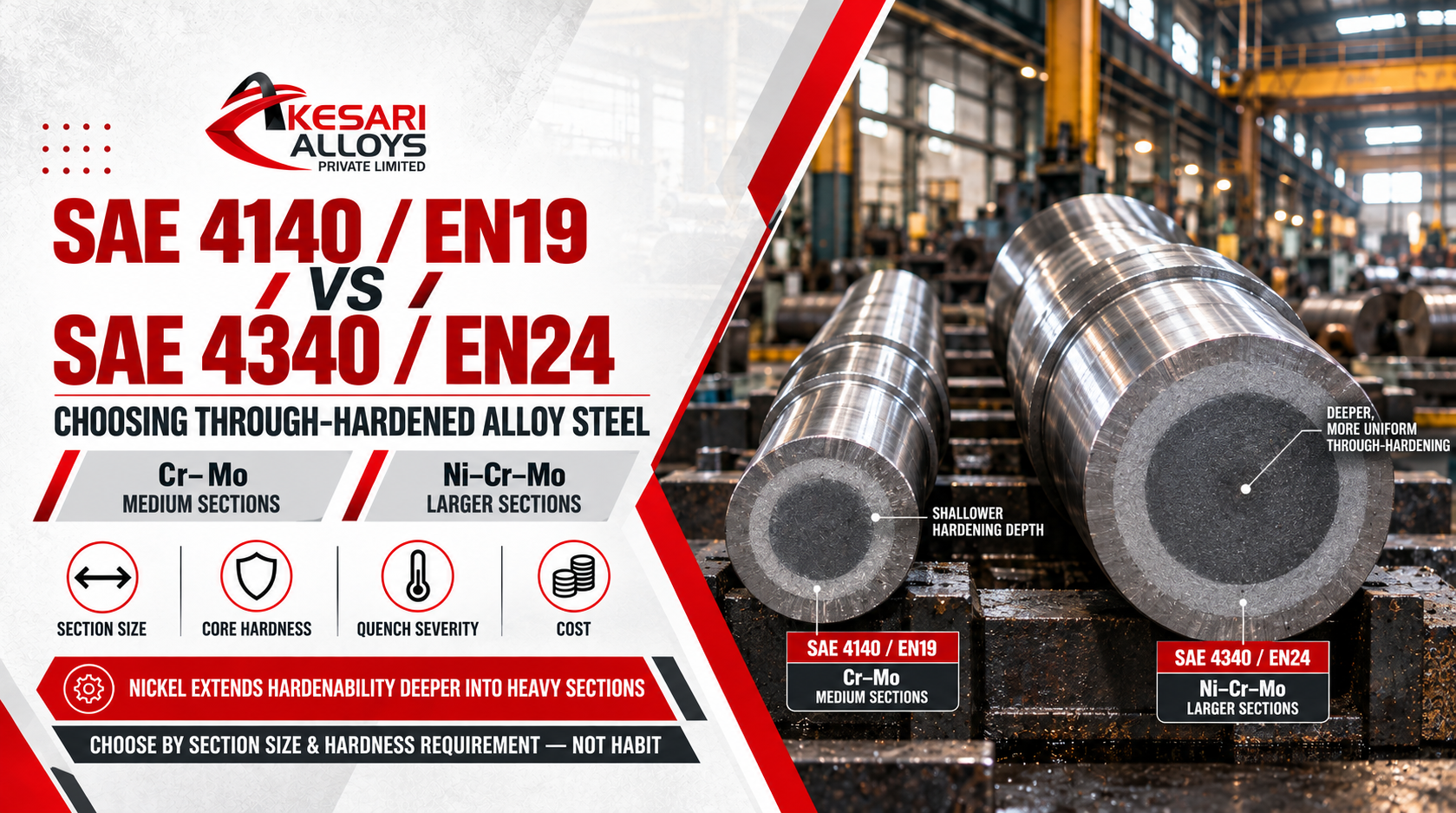
SAE 4140 vs SAE 4340 vs EN19 vs EN24: Choosing the Right Through-Hardened Alloy Steel for Shafts and Structural Forgings

Quick answer SAE 4140 and EN19 (both chromium-molybdenum steels) suit medium-section shafts and structural forgings needing good strength and toughness at moderate cost. SAE 4340 and EN24 add nickel, which raises hardenability significantly and lets larger sections through-harden without a severe water quench –  the right choice when section thickness, or the need for a … Read more