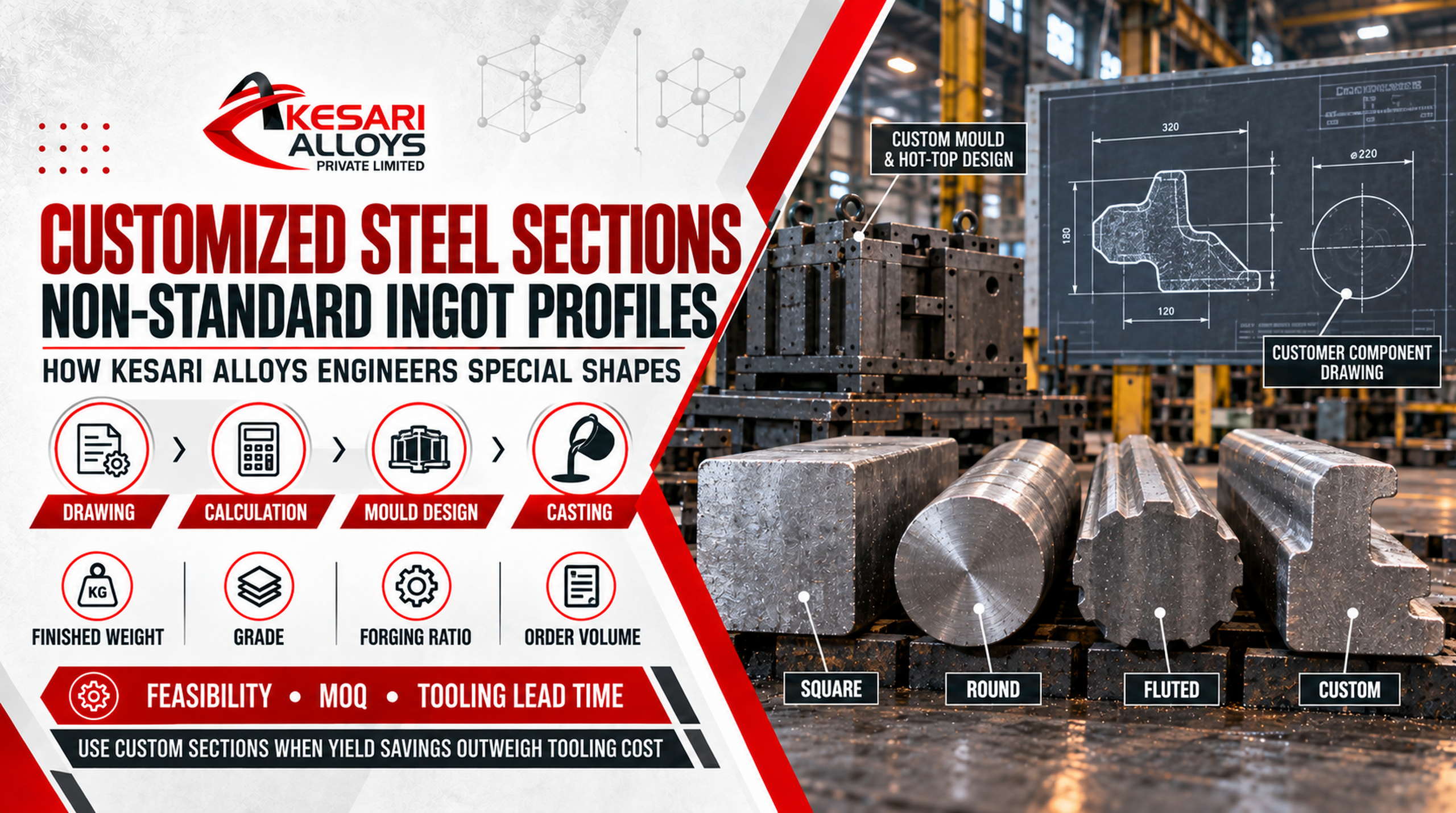
Fluted, Square or Round Ingot Moulds: How Mould Design Controls Cracking and Segregation

The mould does far more than hold the shape. It controls how fast and in which direction the steel solidifies, and that decides grain structure, the extent of centreline segregation, and whether the surface cracks. Fluted molds increase surface area and speed up heat extraction. Square moulds are the general-purpose choice for drawing down. Round … Read more

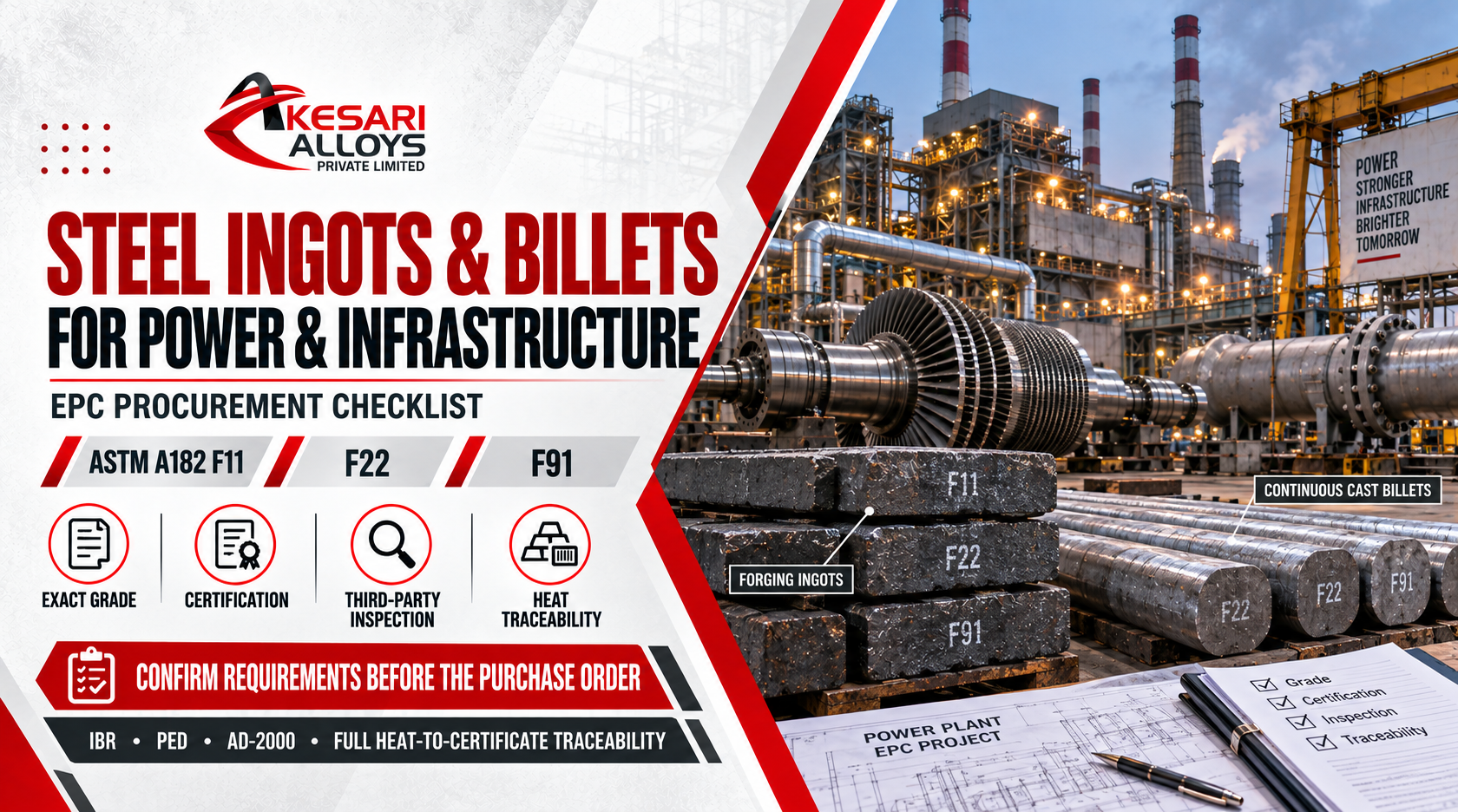
Alloy Steel for the Valve and Oil Field Industry: ASTM A182 F11, F22, F91 and LF2 / LF3

For valve and oil field forgings, grade selection is driven almost entirely by service temperature and environment. Use A350 LF2 / LF3 for low-temperature service, A182 F11 and F22 for elevated-temperature and hydrogen service in refineries, and A182 F91 for high-temperature, high-pressure steam and power applications. Where the medium contains hydrogen sulphide, the material must … Read more

EN31 SAE 52100 Bearing Steel: Composition, Heat Treatment & Cleanliness

EN31 SAE 52100 bearing steel composition heat treatment and steel cleanliness

EN31 SAE 52100 bearing steel is widely used for bearing races, balls, rollers and other precision components where high hardness and fatigue resistance are required. EN31 SAE 52100 bearing steel is a high carbon, high chromium through-hardening steel used for ball and roller bearings. It is known internationally as SAE 52100, AISI 52100 or 100Cr6. … Read more

IBR Approved Alloy Steel Industry : Meaning, Certification & Verification Guide For IBR Approved Alloy Steel

IBR stands for the Indian Boiler Regulations, 1950, framed under the Indian Boilers Act, 1923. When a supplier calls itself an IBR approved forging ingots manufacturer, it means the mill and its material are recognised under those regulations for use in boilers and steam pressure parts, and that it can issue material certificates in the … Read more

Forging Ingots vs Continuous Cast Billets: Which One Should Your Forging Shop Actually Buy?

Forging ingots vs continuous cast billets is one of the most common comparisons for forging shops in India. Choosing the right material depends on component size, forging ratio, cost, yield and application. Choose forging ingots when you need large cross-sections, heavy finished weights, open die forging, ring rolling or a high forging ratio. Choose continuous … Read more

20MnCr5 vs SAE 8620: Choosing the Right Case Hardening Steel for Gears and Transmission Components

20MnCr5 vs SAE 8620 | kesari alloys

20MnCr5 vs SAE 8620 The Practical Decision: Which Grade Wins? In the Indian automotive and industrial gear markets, the choice between 20MnCr5 and SAE 8620 often dictates the balance between manufacturing cost and component longevity. If you are producing standard transmission gears for passenger vehicles or light commercial trucks where cost-efficiency is paramount, 20MnCr5 is … Read more

Alloy Steel Rolled Bars in India: Sizes, Grades and Why Bars Rolled From Vacuum Degassed Billets Perform Better

Alloy Steel Rolled Bars in India: Sizes, Grades and Why Bars Rolled From Vacuum Degassed Billets Perform Better

For machine shops and component manufacturers, the quality of a finished part is often determined by a choice made months earlier at the melt shop. While many suppliers offer Rolled Bars and Alloy Steel Round Bars, there is a significant performance gap between a generic bar and one engineered from a vacuum-degassed (VD) route. As … Read more

Ladle Refining Furnace (LRF) Technology: How It Elevates Alloy Steel Billet Purity Beyond Standard EIF Melting

LRF steel billets, alloy steel billets India, sulphur in steel billets, continuous cast billets, billet manufacturer India

When a re-roller specifies alloy steel billets for bearing rings, or a forge shop orders billets for critical automotive transmission components, the purchase order chemistry column tells only part of the story. A billet reading 0.38–0.45% C, 0.80–1.10% Cr, and 0.15–0.25% Mo – squarely within an AISI 4140 specification – can be either a reliable … Read more

Billets vs Blooms: Understanding the Difference and Choosing the Right Semi-Finished Steel

Billets vs Blooms: Understanding the Difference and Choosing the Right Semi-Finished Steel | Kesari Alloys

If you work in forging, ring rolling, re-rolling, or bar manufacturing, you deal with semi-finished steel products every day. But when a supplier asks whether you need billets or blooms, do you know exactly what differentiates the two β€” and which one your process actually requires? The terms are often used interchangeably in casual conversation, … Read more