Quick answer
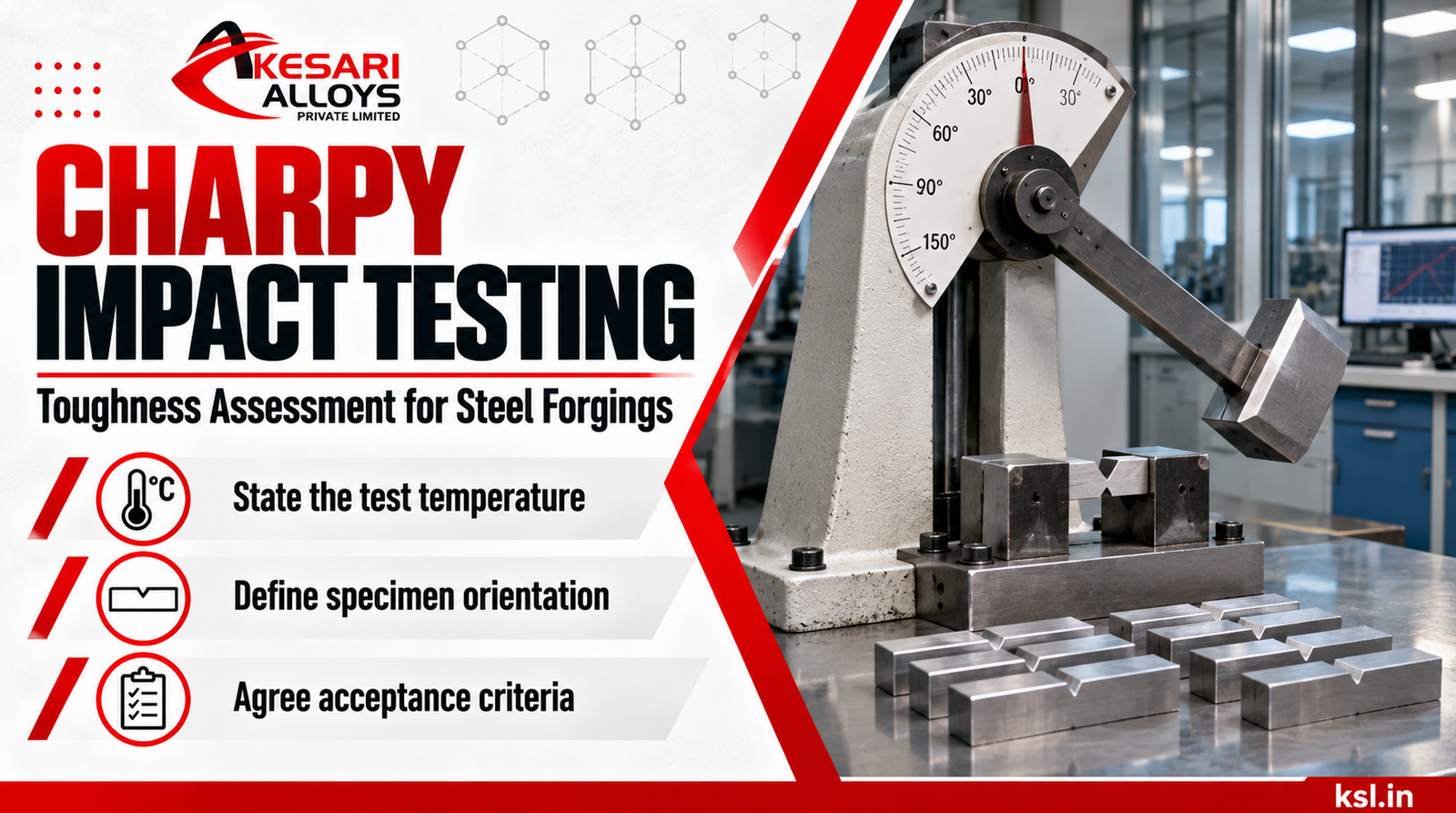
The Charpy pendulum impact test measures the energy absorbed when a notched metallic specimen is broken under specified test conditions. A useful requirement identifies the method, temperature, specimen geometry, orientation, sampling location and acceptance criteria. A value in joules without these conditions is incomplete. ISO 148-1 specifies the metallic-materials Charpy pendulum test method. [7]
Why strength alone does not complete the specification
A component can require both strength and resistance to brittle fracture under its intended service conditions. These are separate questions in the inspection plan. A tensile result should not be treated as a substitute for an impact requirement specified by the design authority.
For purchasing teams, the practical task is to preserve the connection between service requirements and the ordered inspection. If the drawing requires a particular impact test condition, copying only the minimum energy into the purchase order loses information needed to interpret the result.
Specify the test temperature
State the required test temperature explicitly. Do not assume room-temperature testing is acceptable because the enquiry says impact tested. Where the product standard or customer specification fixes the temperature, carry that requirement into the inspection plan and supplier quotation.
Avoid selecting a temperature simply because another customer uses it. Engineering should establish the applicable requirement for the part, and procurement should communicate it accurately. A test programme is meaningful only when it answers the intended acceptance question.
Identify orientation and sampling location
A forging has a manufacturing direction and a defined geometry. The inspection plan should show where the specimen will be taken and how it is oriented relative to that geometry or working direction. It should also identify the condition in which the material is tested.
Clarify whether the requirement applies to a raw material sample, a separately prepared test piece, an extension or a specimen removed from the finished forging. These options should be evaluated against the applicable product specification rather than treated as interchangeable paperwork.
If there is limited material for a full-size specimen, agree the permitted alternative before testing. Do not compare a smaller specimen result directly with a full-size requirement without an applicable basis for doing so.
Define acceptance before the test
Specify the number of specimens, required values, applicable individual and average limits, and the governing retest rules. Where a standard already provides these requirements, identify the exact specification and relevant contractual edition instead of rewriting an incomplete version of its rules.
The report should allow the buyer to connect the result to the heat, tested condition, sample location and order requirement. Without that connection, even a favourable result may fail to answer whether the supplied material complies.
How this differs from ultrasonic testing
Charpy testing assesses a specimen’s impact response under specified conditions. Ultrasonic testing examines material for relevant internal discontinuities. One does not replace the other. When both are required, list them separately, with their own methods and acceptance criteria.
Frequently asked questions
What does a Charpy result in joules mean
It is the energy absorbed in the specified impact test. Interpret it with temperature, specimen geometry and the applicable acceptance requirement. [7]
Can an ingot certificate prove finished forging impact performance
Not by itself. Confirm that the sampling, processing condition and test basis meet the finished product’s specification.
Is one minimum impact value appropriate for every alloy steel forging
No. The design and governing product requirements determine the acceptance criteria for the intended application.
Send a complete testing requirement
For KSL raw steel enquiries, attach the grade specification and required inspection plan. Identify which requirements apply at material supply and which will be verified after forging or final heat treatment. Explore the grade range at https://ksl.in/steel-grades-family.html or contact info@ksl.in.