Quick answer
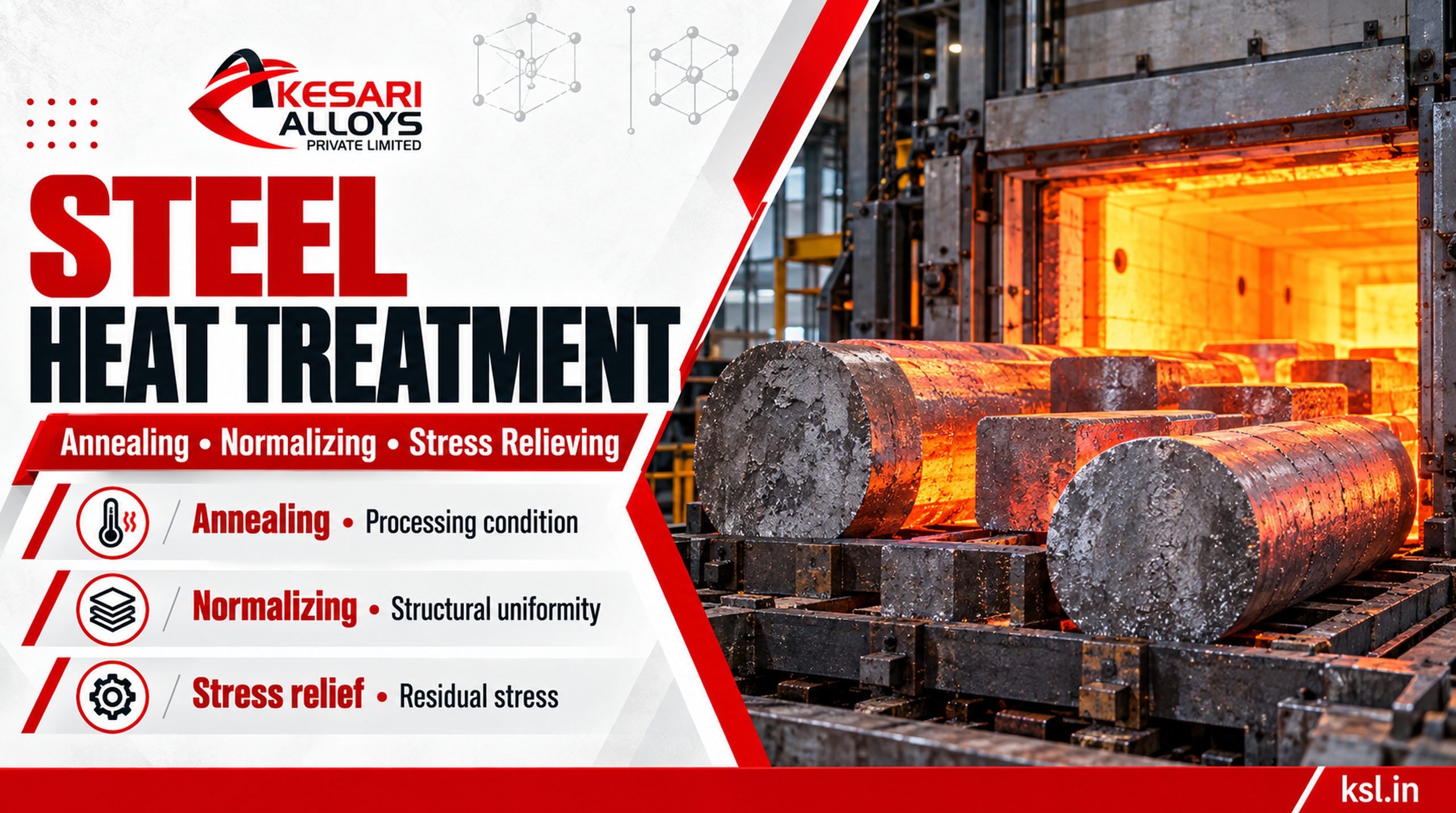
Annealing is commonly used to soften suitable steels and improve their ability to undergo further processing. Normalizing is used mainly for carbon and low-alloy steels to obtain a more uniform, refined structure after hot working or casting. Stress relieving reduces residual stress while aiming to preserve the existing material condition. Select the process from the required result and the stage of manufacture, not simply from the phrase “heat treated.
Define what the next operation needs
A forge shop, a rough-machining workshop and a finished-shaft manufacturer may all request heat treatment for different reasons. One needs material suitable for further shaping. Another wants a manageable machining condition. The third needs dimensional stability before a close-tolerance finishing operation.
Write the desired result into the manufacturing plan. If the problem is difficult machining, define the required incoming condition. If the issue is movement after stock removal, discuss the material history and treatment sequence. This gives the heat treater a specific requirement to evaluate.
Annealing and machining condition
Annealing covers a range of treatments rather than a single universal furnace cycle. In steels, it is commonly used to lower hardness, increase ductility or prepare a suitable structure for subsequent processing. Soft annealing and spheroidizing are relevant to selected higher-carbon and tool steels where carbide condition affects machining. [1, 4]
A purchase order should specify the required annealed condition and any hardness or structural acceptance requirement. The word “annealed” alone does not tell the machine shop what cutting behaviour to expect. It also does not mean that the material already has the final strength required in service.
Normalizing and structural uniformity
Normalizing generally involves heating above the appropriate transformation temperature and cooling in air. It is mainly applied to carbon and low-alloy steels after processes such as forging, rolling or casting to refine and make the structure more uniform. The result depends on the steel and the section. [2, 5]
If normalized material is required, identify whether normalizing is the final supply condition or an intermediate operation before another treatment. Do not assume it is suitable for every alloy simply because it is appropriate for a familiar carbon steel. The treatment plan should use the selected grade’s technical requirements.
Stress relieving and dimensional stability
Stress relieving is intended to reduce residual stresses. It is often considered after rough machining and before finishing where dimensional movement is a concern. The chosen temperature must be compatible with previous treatment so that the operation does not undermine the required hardness or properties. [3]
Give the heat treater the previous processing history. A stress-relief request for a previously hardened tool needs different information from a request for a rough-machined carbon-steel shaft. Record the intended final condition and the remaining machining allowance alongside the treatment instruction.
Compare the processes by purpose
| Process | Main purpose | Typical planning question | Acceptance to define |
| Annealing | Prepare a suitable softer or more ductile condition | What condition is needed for the next manufacturing step | Required hardness or structure where applicable |
| Normalizing | Refine and improve uniformity of suitable steel structures | Is this an intermediate or final treatment | Specified properties in the normalized condition |
| Stress relieving | Reduce residual stress | What prior treatment and dimensional requirement must be preserved | Approved cycle and any required dimensional or property checks |
These treatments are distinct from a specified hardening-and-tempering route. A process name should always be accompanied by its purpose and acceptance requirements. [1–3]
Build the sequence around the part
For a component requiring extensive stock removal, discuss whether an intermediate operation belongs between rough machining and finishing. For a forging that will later receive final hardening, agree the condition needed after forging and before machining. Confirm responsibility for each operation so that a treatment is neither omitted nor performed twice without a reason.
An effective route card records the grade, heat identity, product dimensions, treatment instruction and required checks. Retain the actual treatment record against the material or component identification. This makes it possible to investigate a machining or inspection problem without relying on the phrase “standard heat treatment.”
Questions to settle before ordering
· What condition must the material have when delivered to the next workshop?
· Which operations remain before the component enters service?
· Does the drawing specify hardness, microstructure or mechanical properties?
· Where should the samples or readings be taken?
· Who supplies the treatment record and associated inspection results?
Compare quotations against those answers. A lower-priced offer may cover a different supply condition or leave downstream treatment to the buyer.
Frequently asked questions
Are annealing and normalizing the same process
No. They have different treatment objectives and cooling approaches. Select the required condition for the steel and manufacturing stage rather than using the terms interchangeably.
Does stress relieving replace final hardening
No. Stress relieving addresses residual stress. Final strength and hardness requirements may need a separate qualified heat-treatment route.
Can one temperature be used for all forging grades
No. The grade, dimensions, previous condition and treatment objective determine the appropriate procedure. Use the approved technical requirements for the actual material.
Should annealed material be accepted by hardness alone
Use the acceptance requirements stated in the order. Depending on the application, the required evidence may also include microstructure, mechanical results or other checks.
Discuss supply condition and treatment with KSL
KSL’sforging ingot pagelists annealed supply, and itsmanufacturing infrastructuredescribes electric heat-treatment equipment and processes. Send the grade, starting dimensions and required delivery condition through theKSL enquiry page. Confirm the treatment and inspection scope for the particular order.