Quick answer
Boron is used in small controlled additions to improve steel hardenability. KSL lists 20MnCrB5 as a boron-alloyed grade for case-hardened and heat-treated engineering applications. Its suitability depends on the complete chemistry, section size and thermal processing. A boron figure on a certificate should be assessed alongside the specified grade and required heat-treatment response. [1–4]
Hardenability and hardness answer different questions
Hardness describes the condition measured at a location in the material. Hardenability describes how readily steel develops a hardened structure through a section under defined cooling conditions. A high surface hardness reading does not, by itself, show that the centre meets the required condition.
This distinction matters when comparing two sections made from nominally the same grade. The heat-treatment team should assess the actual dimensions and cooling route. Published hardenability information, including Jominy data where specified, helps the discussion move beyond the alloy name. Ovako’s heat-treatment guidance uses chemistry and hardenability information to examine material response. [2]
Why boron control matters
Boron can improve hardenability in lower and medium-carbon steels without requiring the same level of other alloy additions. The effect is sensitive to the material’s metallurgical condition. Research has examined how boron interacts with aluminium, titanium and nitrogen and how austenitising temperature affects the result. [1, 3]
For a buyer, the practical implication is to specify the required grade and response rather than request “more boron.” Adding more of an alloying element is not a purchasing substitute for a qualified material specification. If consistent hardenability is important, ask what evidence is required by the agreed standard and manufacturing plan.
Where 20MnCrB5 fits
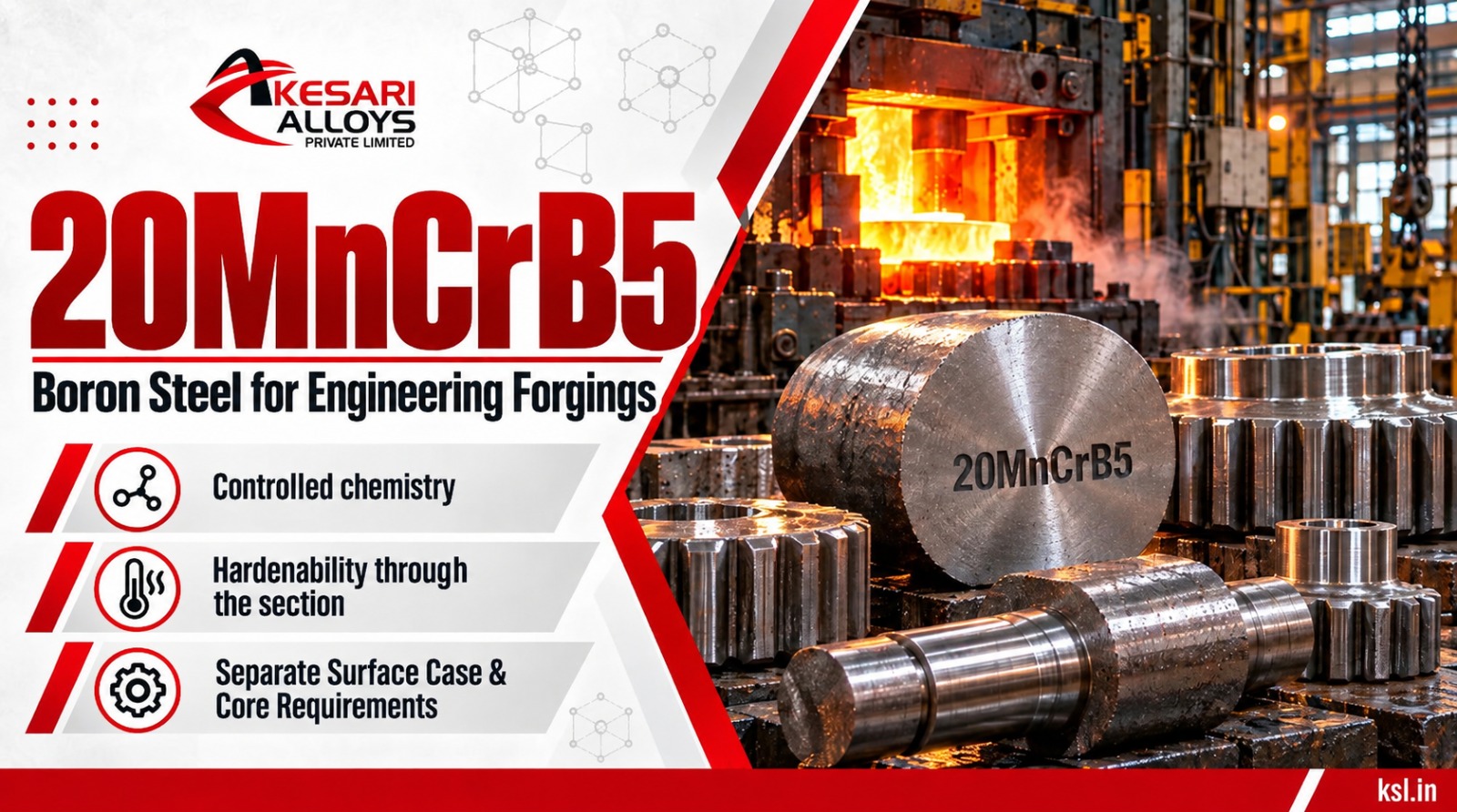
KSL describes 20MnCrB5 as a low-carbon manganese-chromium-boron steel and lists it for applications involving case hardening and heat treatment. That makes it a relevant grade to discuss for engineered components needing a specified surface and core condition. [4]
The grade should be evaluated against the component drawing. Do not treat it as interchangeable with every boron steel used in fasteners, agricultural wear parts or sheet forming. Those products may use different carbon levels, chemistry limits and processing routes. A shared boron addition does not make them the same material.
Turn the required performance into order details
| Order detail | What the buyer should state | Why it helps |
| Grade definition | 20MnCrB5 and the agreed governing specification | Avoids selection from a broad boron steel label |
| Component geometry | Finished section and drawing reference | Supports evaluation of the required treatment response |
| Processing route | Forging, machining and intended final treatment | Clarifies the condition needed at each stage |
| Hardenability evidence | Test or acceptance requirement where specified | Connects the order to the required response |
| Final properties | Drawing requirements and test locations | Separates surface and core acceptance |
| Traceability | Heat marking and certificate requirements | Keeps the delivered material linked to its records |
Agree these fields before comparing supplier offers. If the drawing leaves the grade specification open, seek clarification from the design authority before placing a production order.
Keep the case and core requirements separate
Where carburising or another case-hardening route is intended, establish the required case condition and core properties with the component manufacturer. A case specification may include depth, hardness and inspection locations, while the core requirement may concern strength or toughness. These are separate acceptance questions and should be recorded clearly.
Raw material chemistry cannot demonstrate the final component’s case depth or core properties on its own. Identify which tests will be performed on the incoming material, which belong to the processed component and who will issue the results. This prevents a material certificate from being used as evidence for an operation that has not yet taken place.
Evaluate a proposed substitution carefully
When replacing an established grade, compare the material specification and intended treatment before planning a production trial. Ask the manufacturer to identify the properties that must remain unchanged, any process changes needed and the evidence required for approval.
Use a controlled trial to evaluate the proposed material at the actual component section. Keep its results linked to the heat number and treatment record. An acceptable result on a small sample should not be extended to a substantially different part without engineering assessment.
Frequently asked questions
Is boron steel a single grade
No. Boron steel describes a group of steels with boron additions. The carbon content, other alloying elements and applicable specifications differ between grades.
Is 20MnCrB5 automatically interchangeable with 20MnCr5
No. Evaluate chemistry, required hardenability, treatment and the component specification. Any substitution needs approval through the relevant engineering process.
Does more boron guarantee more hardness
No. The hardenability effect depends on chemistry and thermal processing. Final hardness also depends on the achieved structure and treatment condition.
Should Jominy testing be requested for every order
Request it when required by the material specification or engineering acceptance plan. Define the acceptance criteria and traceability rather than adding an unspecified test to the enquiry.
Enquire about boron alloy steel at KSL
Review KSL’s 20MnCrB5 grade page and steel grade family. Send the grade specification, component section, starting material form and required tests through the KSL enquiry page.